ECO-1676 · REV C · effective October 15, 2026
Industry Analysis & MarketsAPPROVEDEngineering notice
AlixPartners: $11,000 Cost Gap Threatens Europe's Carmakers
Chinese EVs cost about $20,000 to produce versus $31,000 for European models, AlixPartners says, warning that decisions in the next 12-18 months will shape the decade ahead.
Scope of change
- AlixPartners puts Chinese-branded EV production cost at ~$20,000 versus ~$31,000 for a European equivalent.
- European carmakers derive under a third of sales from models launched in the last three years; Chinese rivals reach 76-100 percent.
- Around 80 percent of cathode and battery-grade material refining capacity sits outside Europe.
- AlixPartners says decisions in the next 12 to 18 months will shape the industry for the decade ahead.
- Regulatory divergence forces most European carmakers to fund three distinct regional platforms rather than one.
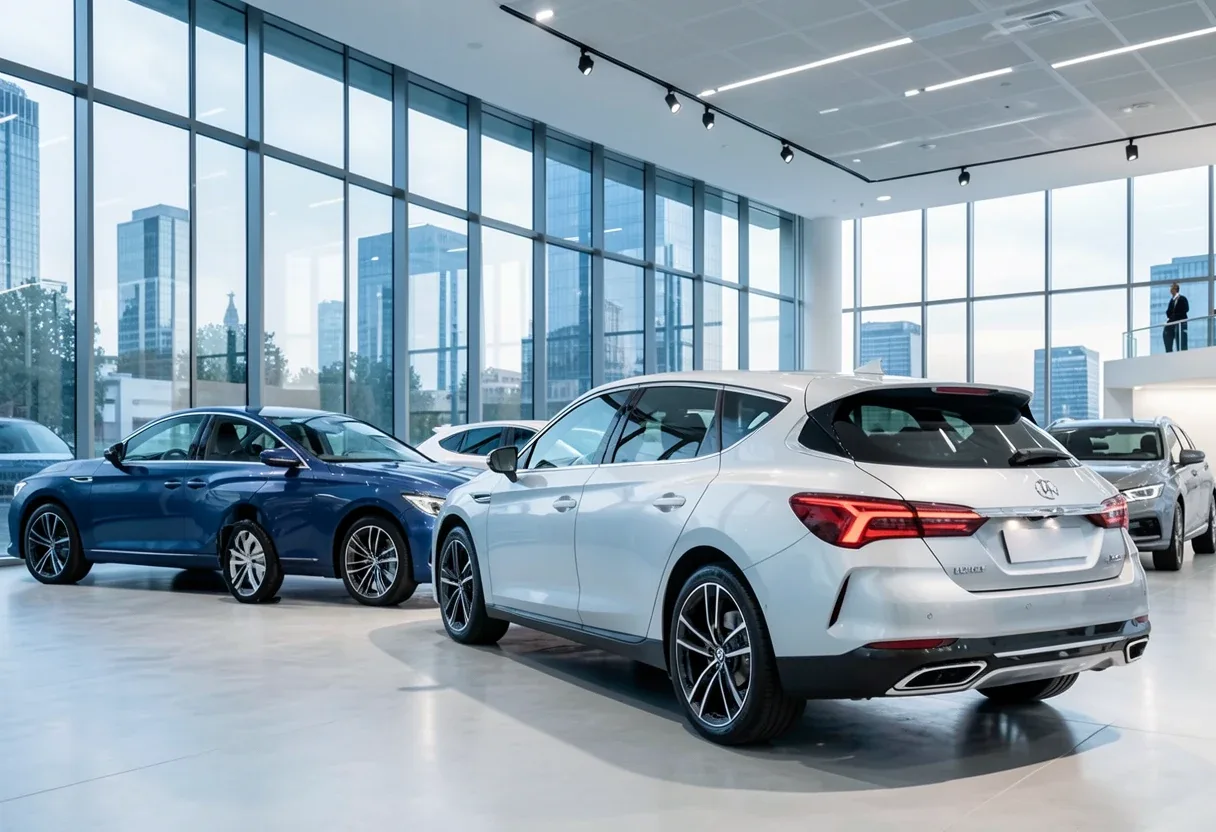
A typical Chinese-branded electric vehicle costs around $20,000 to produce, against roughly $31,000 for an equivalent European model. That $11,000 gap sits at the centre of a new AlixPartners report, "Can Europe Still Build Cars into the 2030s?", which argues that European automakers and suppliers must take drastic steps now because tariffs, trade exemptions and current industrial policy cannot close it alone.
The analysis follows a turbulent summer for the European automotive sector, marked by accelerating Chinese market share gains, continued margin pressure and uncertainty over the industry's long-term direction.
How wide is the cost and product gap?
Andrew Bergbaum, global co-leader of the automotive and industrial practice at AlixPartners, framed the stakes bluntly: "Europe built its modern industrial prosperity on the car. That legacy is now at stake."
The cost disadvantage compounds a product freshness problem. Bergbaum said established European carmakers derive on average less than a third of their sales from models launched in the last three years, compared with 76 to 100 percent for their Chinese rivals. Chinese manufacturers have also built software-defined architectures (vehicle systems whose functions are controlled and updated through code rather than dedicated hardware) from the outset.
"Value in the car is shifting from hardware to code, yet Chinese carmakers have built software-defined architectures from the outset, updating and iterating at a pace European manufacturers have yet to match," Bergbaum said.
Chinese manufacturers are also, in his words, "circling underused European factories" — a direct threat to plant utilization across the continent — while the cost of developing the next generation of vehicles runs to billions of euros at the moment carmakers can least afford it.
Why does regulation make it worse?
Regulatory divergence between China, Europe and the United States on vehicle connectivity, automated driving software and data localization has, according to Bergbaum, "effectively ended the era of the global car". No single connected vehicle platform can now satisfy all three regulatory regimes at once, so most European carmakers must plan and fund three distinct regional platforms rather than one — roughly tripling platform engineering and homologation spend for global players.
The battery supply chain adds a further structural constraint. Around 80 percent of cathode and battery-grade material refining capacity sits outside Europe, leaving battery plants built on European soil dependent on inputs priced and controlled elsewhere. AlixPartners finds that current policy incentives are not addressing this problem at the required pace or scale. The consultancy attributes the battery cost problem to geography, energy prices and raw-material dependencies that operational improvement cannot overcome.
What does AlixPartners want manufacturers to do?
The report calls on manufacturers to act now — consolidating operations, repurposing sites or closing plants where necessary — and warns that those who delay will find their decisions shaped by circumstance instead.
Alexandre Marian, head of AlixPartners' automotive and industrial practice in France, put a clock on it: "The decisions made in the next 12 to 18 months will shape the industry for the decade ahead. Europe has exceptional engineering capabilities, but the competitive benchmark has changed."
Marian said manufacturers need two-year development cycles, AI-driven cost and time-to-market reduction, and continued investment in next-generation vehicles. Governments, he argued, must provide long-term certainty on EV regulation and "be equally clear-eyed" about the consequences of industry's difficult choices.
Bergbaum cautioned against reading the outcome as fixed: "This is not a story with a predetermined ending. The companies and governments that make bold commitments now will define European automotive for the next decade. Those that continue to defer will find those decisions made for them, on someone else's terms."
What to watch next
These are consultancy recommendations, not confirmed industrial plans, and they should be tested against announced capacity decisions and launch schedules. The markers to track: plant closures or repurposing announcements from European OEMs (a Tier 1 supplier's decision affects a different employment footprint than an assembly plant's), any consolidation moves within the next 12 to 18 months, and whether Brussels delivers the long-term EV regulatory certainty that the report demands. The window, in Bergbaum's words, "is closing faster than most boardrooms and governments assume".
By Sophie Lindqvist
via bnpmedia.com (Original)
More from Sophie Lindqvist
Show full bio
Correspondent covering money, funding and market shifts around Automotive manufacturing and vehicle production at Autoplant Brief.
222 articles
Also circulated
- SAIC Motor Commits $232 Million to New Auto Plant in Spain
- Chinese carmakers are piling pressure on UK rivals, industry chief says
- ITIF: US Auto Industry Needs National Strategy for China Challenge
- Forbes Analysis: Tariffs, Margins, EV Slowdown Fuel Auto Consolidation
- Xpeng Confirms European EV Production Push; Capacity, Site, Timing Still Pending