ECO-1105 · REV H · effective October 15, 2026
Vehicle Plants & ProductionRELEASEDEngineering notice
Hyundai opens Pune plant at 170,000 units, targeting 320,000 by 2030
Hyundai's new Talegaon plant starts at 170,000 units a year, lifting group capacity in India to 1.4 million, with US$1.16 billion pledged in phases.
Scope of change
- Pune (Talegaon) plant opens with 170,000 units/year capacity, planned to reach 320,000 by 2030
- Hyundai Motor Group's total India capacity now 1.4 million vehicles/year across three plants
- HMIL to invest INR 11,000 crore (US$1.16 billion) in phases; 55 suppliers have invested INR 4,600 crore
- Production begins with the new Venue, exported to more than 35 markets
- HMIL has exported 4 million cumulative vehicles since 1999
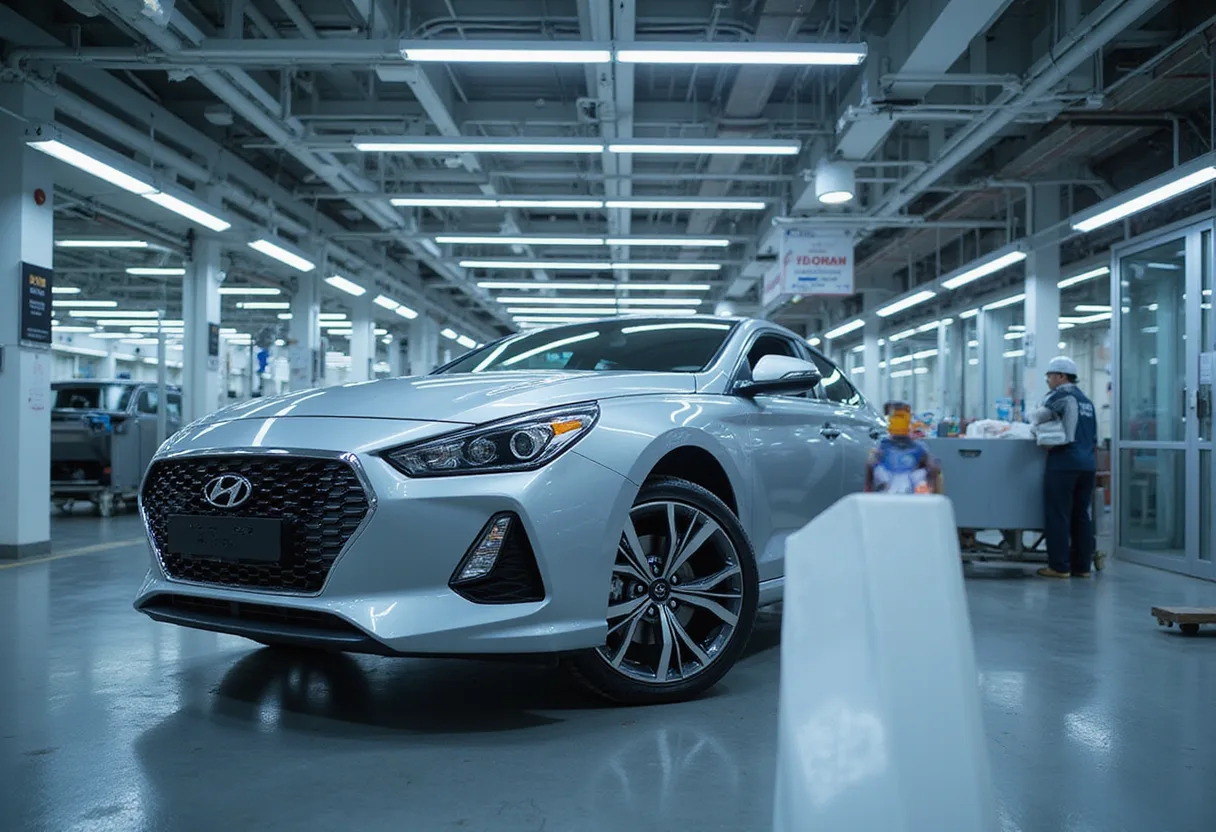
Hyundai Motor has inaugurated a new assembly plant in Talegaon, near Pune in Maharashtra, with a confirmed initial capacity of 170,000 vehicles per year — and a stated plan to nearly double that to 320,000 units by 2030.
The ceremony doubled as a 30th-anniversary celebration for Hyundai Motor India Limited (HMIL), which entered the Indian market in 1996. Production has already started: the all-new Venue sub-compact crossover, built for domestic sale and export to more than 35 overseas markets.
How big is Hyundai's India footprint now?
With Talegaon online, Hyundai Motor Group's annual production capacity in India reaches 1.4 million vehicles. That stacks up as:
- 170,000 units — new Pune (Talegaon) plant
- 824,000 units — Hyundai's Chennai facility
- 431,000 units — Kia's plant in Anantapur
For scale, 1.4 million vehicles a year is roughly one car rolling off an Indian Hyundai Group line every 22 seconds, around the clock.
Hyundai described the facility as "a strategic expansion of Hyundai Motor Group's manufacturing footprint in India and a core driver of its future growth." The company also confirmed the site has an engine shop with initial capacity of 150,000 units per year.
The expansion to 320,000 units by 2030 is an announced intention, timed to a specific date. The 170,000-unit figure is confirmed, running today. The distinction matters in India, where stated capacity plans have historically slipped against deadline.
What is Hyundai investing — and who's following?
HMIL CEO and managing director Tarun Garg put hard numbers on the commitment: "We will invest INR 11,000 crore (US$1.16 billion) in phases in this facility."
Garg also anchored the plant to its supplier base — a useful gauge of whether an OEM announcement has real local pull. He said 55 supplier partners have already invested nearly INR 4,600 crore in Maharashtra, and that the ecosystem, together with tier-II vendors, has created more than 18,000 jobs in the state.
That's roughly INR 84 crore of supplier money per vendor, and a jobs figure worth watching against future state incentive disclosures.
What did the chairman say?
Group chairman Euisun Chung tied the plant to a bigger export story. "India remains one of Hyundai's most important and strategic markets globally," Chung said in a statement. "The inauguration of the Pune plant reflects our long-term commitment to India's growth and our confidence in its bright future."
He also flagged a milestone: HMIL has exported 4 million cumulative vehicles since 1999 — evidence, he argued, of "the global competitiveness of Indian manufacturing."
Four million exports over 26 years averages out near 154,000 units a year — meaning the new Pune plant alone, at full ramp, could roughly double that historical export pace.
How smart is the 'smart factory' claim?
Hyundai says Pune ranks among the group's most advanced plants globally, integrating Industry 4.0 systems, AI-enabled production, and its E-FOREST digital manufacturing platform. The company lists AI-driven analytics, predictive maintenance, AI-based quality inspection and defect detection, digital simulations, and AR workforce training.
The flexible lines support multiple models, including ICE and hybrid vehicles — a hedge, in effect, against India's still-uneven EV demand curve. Those are the company's claims; the proof will show up in throughput and quality data over the first full production year.
Hyundai also points to industry-academia partnerships and battery and electrification research with Indian institutions — intentions, not yet dated programs.
The next checkpoints are concrete: the venue export ramp across 35-plus markets, the phased drawdown of the US$1.16 billion investment, and the 2030 push toward 320,000 units.
via just-auto (Source)
More from Daniel Okafor
Show full bio
Senior reporter covering regulation, policy and their impact on Automotive manufacturing and vehicle production at Autoplant Brief.
234 articles