ECO-8485 · REV D · effective October 16, 2026
Automation & RoboticsRELEASEDEngineering notice
Standard Bots Claims AI Cuts Robot Programming Time by 90%
Standard Bots launches Agent, Locate and Inspect AI tools, claiming 90% faster robot programming by replacing manual waypoints with vision and natural language.
Scope of change
- Standard Bots claims its Locate capability reduces robot programming time by 90%.
- Three new capabilities — Agent, Locate, Inspect — are now part of the Standard Bots AI platform.
- Inspect was developed in partnership with Roboflow and runs custom vision models trained on a manufacturer's own parts.
- Head of applied AI Leif Jentoft said integrator-built systems historically cost 'a million dollars' and months of commissioning.
- The company is developing its own foundation models and allows manufacturers to load their own models into the platform.
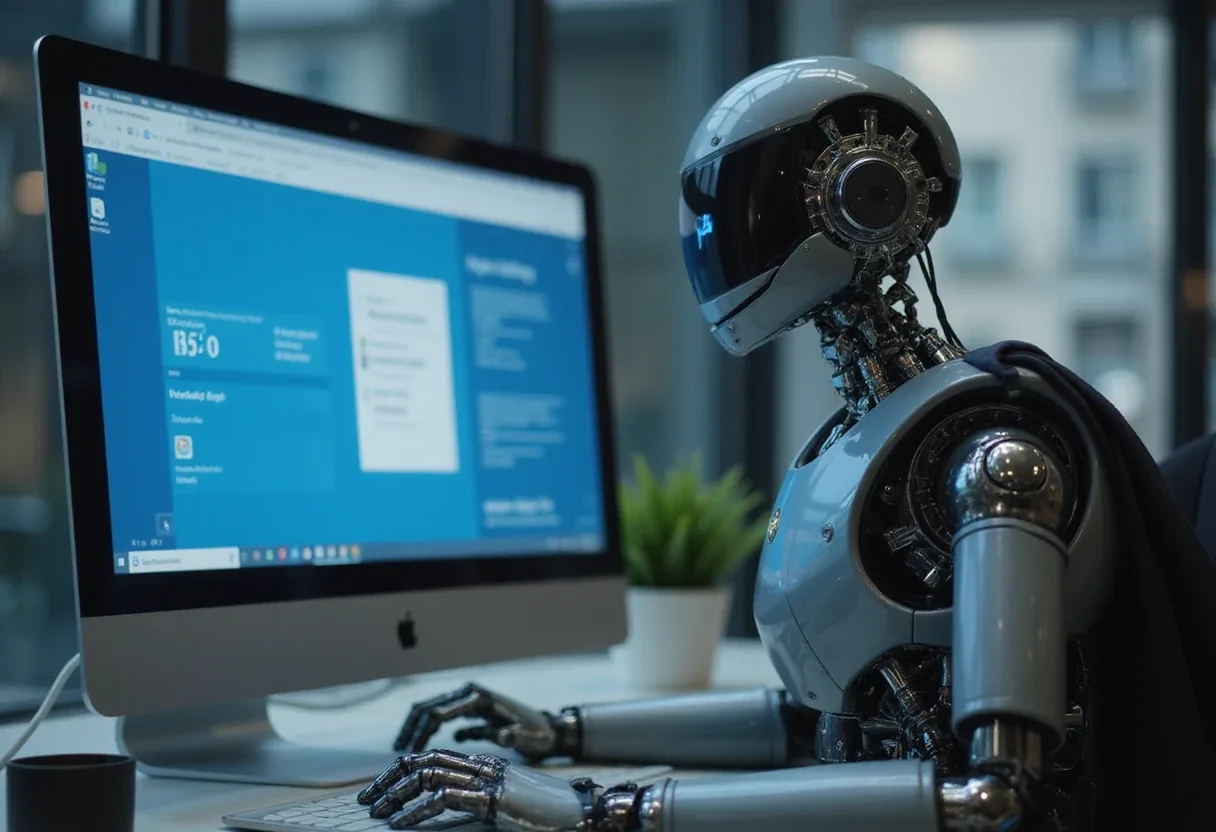
Standard Bots says its new Locate capability cuts robot programming time by 90%, and the Glen Cove, N.Y.-based company is betting that natural-language prompting and machine vision can eliminate the waypoint-by-waypoint teaching that dominates deployment cost in small and mid-sized workcells.
The claim sits at the center of three capabilities — Agent, Locate and Inspect — that the company has added to its Standard Bots AI platform. All three target the same bottleneck: the engineering hours required to get a cobot (collaborative robot, a robot designed to work alongside people) from crate to production.
What does each capability do?
- Agent converts natural-language task descriptions into robot programs. An operator describes a machine-tending routine in plain language; the software then asks clarifying questions about the application and builds the program with the operator rather than for them.
- Locate uses the robot's own video feed to identify and track parts. Instead of manually defining coordinates across multiple waypoints, operators tap an object in the feed or describe it in text. Standard Bots positions this for high-mix production (facilities running many part variants), where frequent changeovers make hand-taught waypoint grids expensive to maintain.
- Inspect adds automated vision inspection to robot routines. Built in partnership with Roboflow, it runs custom vision models trained on a manufacturer's own parts to catch defects such as scratches. Manufacturers can load their own inspection models into the platform.
Who said what
The company's argument is that AI-based programming removes the dependency on systems integrators (third-party firms that engineer and commission automation cells), which it frames as a cost and control problem.
"You used to have to hire an integrator; it costs a million dollars. You spend months dialing it in. And when something breaks in the middle of the night, you can't fix it yourself," said Leif Jentoft, head of applied AI at Standard Bots. "It's like a literal black box on your own shop floor."
Jentoft said the platform changes the working model for the operator: "With Standard Bots AI, you don't have to program every position or keep track of where you are in a routine. You simply show your robot what you want it to do, and it will adapt to higher-mix tasks with simpler, more reliable programs."
What does this change for plant teams?
For manufacturing engineers and maintenance staff, the practical shift is ownership. If natural-language and vision-based programming work as claimed, changeovers in high-mix cells stop requiring re-teaching grids of waypoints, and inspection stops requiring a separate vision integration project. The platform also accepts manufacturer-supplied models rather than locking users into Standard Bots' own — a governance point worth noting for shops with existing vision stacks. Standard Bots is additionally developing its own foundation models (large AI models trained broadly and adaptable to many tasks), which suggests the company intends to compete on its models, not just its tooling.
Treat the 90% figure as a claim
The 90% programming-time reduction comes from the vendor, tied specifically to Locate eliminating manual waypoint grids. No independent production data accompanies the launch. Integrator-dependent deployments routinely take months and large budgets, as Jentoft describes, but plants evaluating the platform should benchmark it against their own changeover times and part-variant counts — high-mix machine tending and inspection are where the economics are most likely to hold.
What to watch next: third-party validation of the 90% figure in live production, adoption among tier-one and tier-two suppliers running high-mix cells, and whether Standard Bots' in-house foundation models arrive as shipped products or stay on the roadmap.
via bnpmedia.com (Original)
More from Marcus Bennett
Show full bio
News editor covering regulation, policy and their impact on Automotive manufacturing and vehicle production at Autoplant Brief.
197 articles
Also circulated
- AWS Open-Sources Physical AI Toolchain for Industrial Robot Development
- Humanoid robots reach factory floors at BMW, Tesla and Mercedes
- Sanctuary AI Reports Physical AI Validation at Tier 1 Auto Supplier
- Toyota Estimates 400,000 Robots Needed for Factory Automation
- Boston Dynamics Plans US Plant for 30,000 Robots a Year