ECO-5818 · REV W · effective October 16, 2026
Auto Industry PolicyAPPROVEDEngineering notice
Why today's auto tariffs won't repeat the industry's first trade war growth
Historians argue the supply-chain integration that defines 2025 vehicle manufacturing was absent during the trade wars that built Detroit. The protectionist mechanism of the 1960s and 1980s does not transfer cleanly to the current tariff cycle.
Scope of change
- Past US auto trade frictions centered on 1980s import quotas and earlier commercial-vehicle tariffs.
- An American car built in the 1960s contained substantially more domestic content than one built in 2025.
- The current vehicle supply chain runs through factories in Mexico, Canada, China, South Korea, Japan, and the European Union.
- Historians cite cross-border supply-chain integration as the key structural difference between past and present tariff regimes.
- Detroit's automakers emerged from past protectionist cycles with both a domestic base and a competitive export capability.
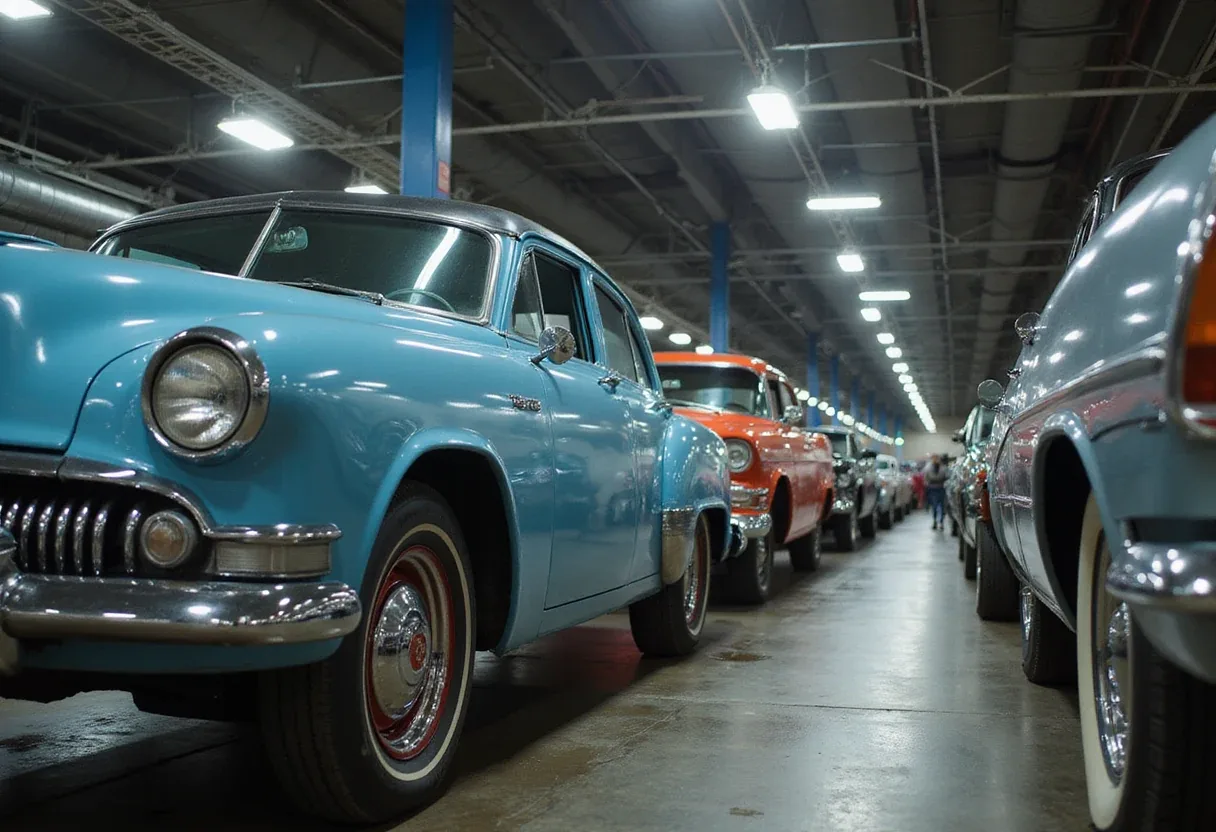
Trade wars built America's auto industry across the twentieth century. The tariffs now reshaping the global vehicle trade, historians argue, lack the conditions that allowed earlier policies to translate into industrial growth.
The argument runs through a comparison of mechanism and era. Past US trade frictions, including the import quotas of the 1980s and earlier tariffs on commercial vehicles, coincided with periods when domestic automakers were expanding production, refining designs, and exporting to foreign markets.
Protection gave those firms room to grow without surrendering the home market. Tariffs (taxes on imported goods) functioned as a temporary ramp rather than a permanent fence.
Why the historical comparison breaks down
Three structural features separate the earlier episodes from the current policy environment. The industry is integrated across borders at the component level, so tariffs on finished vehicles and tariffs on parts both raise the cost of the vehicle on the dealer lot.
The technology mix has shifted toward battery cells, power semiconductors, and software-defined features that travel through multi-jurisdictional supply chains before final assembly. Today's competitors are established global manufacturers with mature cost structures and joint-venture positions, not the emerging entrants of earlier decades.
What past auto trade wars actually accomplished
Past protectionist measures followed a recognizable pattern. A domestic industry faced foreign competition that policymakers judged destabilizing or unfair. The response combined tariffs, quotas, or voluntary export restraints (agreements that cap a country's exports to another) with measures designed to give protected firms time and capital to modernize.
The combination allowed Detroit's automakers to consolidate their domestic position while continuing to export and license technology abroad. Protection lasted long enough for the industry to scale, then gradually relaxed as competitiveness returned.
The cycle of protect, modernize, then re-enter global competition gave the industry both a domestic base and an export capability. Domestic firms emerged with the scale to compete in foreign markets, not the dependency that comes with permanent shelter.
Why historians expect a different outcome this time
Historians who study the twentieth-century episodes underline one difference above all others: the supply chain. An American car built in the 1960s contained substantially more domestic content than one built in 2025.
Tariffs that kept finished foreign vehicles out of the US market also indirectly protected a domestic parts base. The mechanism worked because the supply chain was simple.
The current supply chain runs through factories in Mexico, Canada, China, South Korea, Japan, and the European Union. Parts and subassemblies cross borders several times before final assembly.
Tariffs on vehicles and on parts do not operate as parallel policies; they compound.
The cost does not transfer cleanly to the importing brand. It lands on the bill of materials (the full cost of every component in a vehicle) for every vehicle assembled in North America, including vehicles built by domestic automakers in their own plants.
What to watch next
The next six to twelve months will test whether the tariff regime produces measurable reshoring of parts production. Historical precedent suggests tariffs work when paired with a credible modernization path and a fixed horizon.
Watch for sourcing adjustments from Detroit's automakers ahead of the next model year. Watch also for any policy timeline that ties an exit clause to domestic capacity milestones, and for announcements of new supplier plants on US soil.
via Google News: Auto industry policy (Source)
More from Sophie Lindqvist
Show full bio
Correspondent covering money, funding and market shifts around Automotive manufacturing and vehicle production at Autoplant Brief.
227 articles
Also circulated
- Tariffs, Chinese Rivals and EV Slowdown Drag Auto Sector Into Losses
- Trump Tariffs A Mixed Bag For U.S. Auto Industry, Report Finds
- Tariffs and Policy Shifts Risk Walling Off U.S. Auto Industry
- Trump Tariffs Threaten Broad Disruption Across Global Auto Sector
- US Moves to Ease Auto Tariffs, Transport Topics Reports